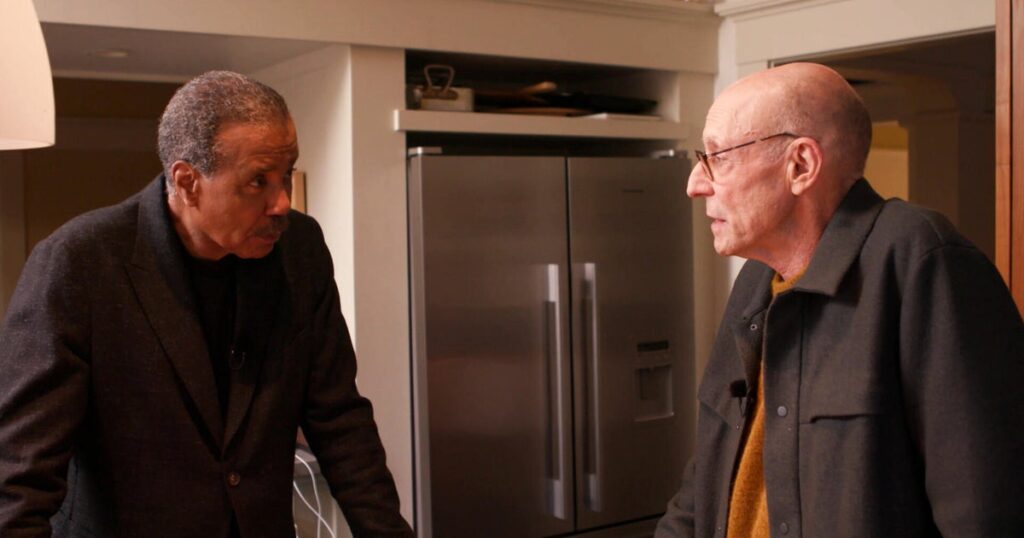

This week, correspondent Bill Whitaker reported on ultraprocessed foods, the plastic-wrapped, ready-to-eat items that line our grocery store shelves. Former Food and Drug Administration Commissioner David Kessler told 60 Minutes that these products, made with highly processed ingredients like corn syrup and maltodextrin, have been making people sick for decades. Kessler told 60 Minutes that they’ve “altered our metabolism and have resulted in the greatest increase in chronic disease in our history: Type 2 diabetes, pre-diabetes, hypertension, abnormal lipids, fatty liver, heart attacks, stroke, heart failure.” He also said these ultraprocessed products can make us want to eat more. “They target the brain reward circuits that keep us coming back for more. They trigger overeating. They deprive us. of any sense of fullness,” he told Whitaker. Food author Michael Pollan agrees with Kessler that ultraprocessed food has contributed to an increase in rates of obesity and diseases like stroke and diabetes. “You know, 70% of Americans are either overweight or obese. so it seems pretty clear there’s something wrong with the way we eat,” he told Whitaker. Pollan cited a study by the National Institutes of Health called “Ultra-Processed Diets Cause Excess Calorie Intake and Weight Gain: An Inpatient Randomized Controlled Trial of Ad Libitum Food Intake. The [researcher Kevin Hall] brought people to a location where they had to live for a month,” he said. “And for two weeks people had ultraprocessed food. They could have as much as they wanted. And the other group could have whole foods. After two weeks, the people on the ultraprocessed food. they were eating 500 more calories a day,” Pollan explained. “He hypothesized that [ultraprocessed food] is energy dense. every bite, you’re getting a lot more calories.” Pollan said that many ultraprocessed foods have been stripped of fiber, which makes us not feel as full and want to eat more. “There’s a set of nutrients we evolved to love. Sugar is a great example. as long as it was rare and special, it wasn’t a problem. But with the ubiquity of sweeteners now, many of them derived from corn, sugar is, like, the cheapest commodity going,” Pollan said. “You pick up a jar of canned tomato sauce. you will find sugar in it, either high fructose corn syrup or one of the many forms in which sugar comes,” Pollan said. “If you look for these labels, you will find it.” The Consumer Brands Association of America, which represents many major American food brands, told 60 Minutes that the companies they represent “innovate to meet consumer demand” and “adhere to FDA science and risk-based evaluation of ingredients before and after they are in the marketplace.” In 2009, Pollan published a best-seller called, “Food Rules: An Eater’s Manual” that offered tips for maintaining a healthier diet. It was adapted into an illustrated version. The number one rule is short and pithy: eat food, not too much, mostly plants. “That’s my dietary guidelines. I wouldn’t change anything,” Pollan said in a recent interview. Another “food rule”: avoid products that contain ingredients a third-grader cannot pronounce. “If you can’t pronounce the ingredients, it’s not food,” he told Whitaker. Whitaker asked Pollan: what is the biggest and best change people could make? “One would be shopping the outside [perimeter] of the supermarket more than the inside. that’s where the produce is. That’s where the fresh food, the dairy is,” he said. “The stuff in the middle is the stuff that gets you into trouble. So shop the perimeter.” Pollan also suggested people cook at home more: at least one night a week, and eat sitting at a table. “If you don’t do it, ever, do it once a week. If you do it once a week, do it twice a week,” the author said. “A big question mark for many people is that these [ultraprocessed] foods are just so convenient,” Whitaker told 60 Minutes Overtime. “You’re able to feed your family for not so much money, and it’s easy to prepare. What if you can’t afford to eat healthy foods?” Whitaker asked Pollan. “We have to change our subsidy structure and figure out a way to subsidize the healthiest calories coming off of the farm,” Pollan said. “And we should have a food policy.”Does it contribute to the health of our population? Does it contribute to the health of the environment?’ If it doesn’t, it’s a bad policy. If it simply makes food cheap but it achieves none of those other goals, it’s totally inadequate.” The video above was produced by Will Croxton. It was edited by Nelson Ryland.
https://www.cbsnews.com/news/what-author-michael-pollan-thinks-we-should-and-shouldnt-eat-60-minutes/
Author Michael Pollan on his “food rules” to live by