


**From Volunteer to Lifeline: Stacy Librandi’s Journey in Haiti Disaster Relief**
In 2010, Stacy Librandi was new to disaster relief when she arrived in Haiti. Stepping onto the Port-au-Prince airfield, she was struck by the sea of people before her — a bustling city-sized crowd of a thousand, sweating under the Caribbean heat, living in tents, and surrounded by mass amounts of supplies: food, water, clothing, and medical aid haphazardly stacked along the tarmac.
It was late January, and Haiti was grappling with the catastrophe of a magnitude 7 earthquake. Librandi, part of the latest planeload of like-minded volunteers, was young, untrained, and eager to make a difference amid devastation. She brought only herself and some camping supplies in a small backpack, planning to stay no longer than a week.
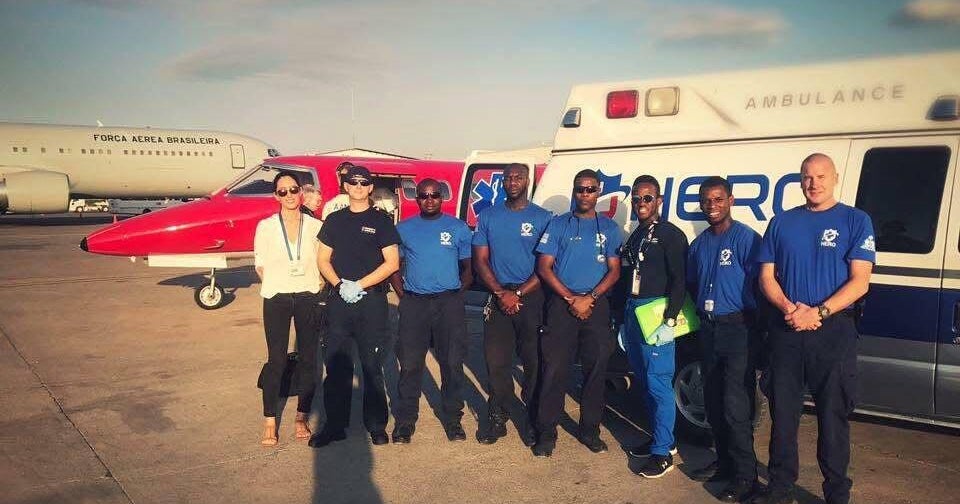
She stayed two weeks. Then three. And now, 16 years later, Stacy Librandi remains in Port-au-Prince, building and running HERO — the Humanitarian Emergency Response Organization. HERO is the largest and most prominent emergency medical ambulance and medevac service in Haiti.
> “I never saw my life going this way,” she told *60 Minutes*. “I just came down thinking I am going to give this a complete shot. And that was when I was born in a lot of ways.”
—
### Stacy Librandi’s Early Life
Born in San Diego, California, and put up for adoption as a baby, Librandi describes her childhood as “unconventional.” She quit school sometime between seventh and ninth grade to live as a nomad, hopping freight trains and crisscrossing the country.
At 19, she married and settled near her husband’s family in the Bronx, New York. Together, they had three children. Librandi kept her married name after divorcing and spent nearly a decade in New York City, trying to build a life, raise her family, and develop a photography business.
Then, in the winter of 2009, disaster struck home. A fire wrecked her apartment. Suddenly, she found herself living out of her car, confronting a failed marriage, a grueling bartending schedule, and an imploding photography business — further damaged by the fire.
—
### A Kneejerk Decision to Help in Haiti
When Haiti’s devastating earthquake hit on January 12, 2010, Librandi made a quick decision to go help.
> “It was a kind of kneejerk decision,” she told *60 Minutes*. “But I had a feeling, and I didn’t have anything to lose.”
Once there, she quickly noticed the chaotic scene on the airfield: food rotting in the sun and people in desperate need. Taking initiative, Librandi gathered a small team — including an English to Creole translator — loaded a box truck with aid, and began distributing supplies to a nearby camp.
She instructed the translator to explain to the camp residents that they would return the next day with more aid, and that they needed to line up specifically to receive it.
> “People said it was a bad idea to go out like this, that we were going to get mobbed,” Librandi said. “But we went back the next day and the men and women and children did exactly what we needed.”
Her organized approach caught on immediately, and soon others at the airfield began to replicate her methods.
> “I have a unique way of problem solving,” she explained. “And the ideas I had just seemed to work.”
—
### Building HERO and Serving Haiti
Librandi’s organization, HERO, which *60 Minutes* paid to escort their news team to Port-au-Prince, now offers the preeminent first response service in Haiti. According to their website, it provides “the highest level of pre-hospital care in the entire region of the Caribbean.”
HERO serves all 10 Haitian states, operating a 24/7 emergency response system resembling a Haitian 911. It is the first and only local emergency response operation of its kind.
In the years following the earthquake, apart from occasional trips to see her kids living with their father in New York, Librandi dedicated herself to consulting and organizing ambulance services throughout Haiti. She worked to connect international assistance with local needs.
Living modestly in a one-room home under a tin roof with her translator’s family, she rode a motorcycle around town meeting groups that facilitated aid and clean-up.
> “I had nothing at the time,” she recalled. “There were ladies that gave me coffee and bread with peanut butter on credit because I didn’t even have 50 cents.”
Despite hardships, she persevered, driven by purpose and kinship with her Haitian colleagues.
—
### Pioneering Ambulance Services in Haiti
Librandi’s vision grew clearer after meetings with the United Nations World Food Program and other agencies. She wanted to see if ambulances could actually work in Haiti.
Funding was the biggest challenge. To overcome this, Librandi developed a low-cost 911 membership program. For an annual fee, members would receive ambulance and EMT services.
Though Haitians were initially skeptical—emergency services were unfamiliar—HERO’s team pressed on. They trained with international charities, secured a base in Librandi’s home, and began responding to emergencies on motorcycles.
Most early recipients of care were non-members; Librandi expected that the business model would need adjustments.
The donation of HERO’s first ambulance in 2012 marked a turning point. The team bought uniforms, made deals with insurance companies, regional ports, local manufacturers, and tourism boards to provide emergency response for their staff.
The model proved scalable. Contracts with large entities allowed HERO to operate freely, responding to emergencies for members (who paid the $100 USD annual fee) and non-members alike.
> “HERO thrives in filling the gaps,” said Coralie Caze, HERO’s general manager and Librandi’s business partner. Caze, a Port-au-Prince native who joined HERO in 2018, emphasized the organization’s adaptability.
> “It doesn’t matter what comes up, we are out in the street responding, which is exactly the kind of operation needed in Haiti,” she said.
—
### Adapting Amid Gang-Controlled Insecurity
HERO’s most dramatic challenge came in 2021, following the assassination of Haiti’s then-president, Jovenel Moïse. Armed gangs seized control of Port-au-Prince; infrastructure crumbled; food and supply routes were blocked; police stations were overtaken; and violence engulfed neighborhoods.
Determined to meet growing needs, Librandi and her team received a call from the late president’s office: the first lady was injured and needed evacuation. Librandi coordinated her medevac to the U.S. — then the airport shut down, followed by the roads.
Locals, tourists, and international volunteers found themselves stranded across Haiti. Librandi facilitated helicopter evacuations, and today, HERO operates four helicopters regularly used for medevacs and air shuttles.
With rising dangers, many NGOs and missions left Haiti. Librandi observed:
> “This was the land of NGOs, the land of Missions, and all those jobs are just gone now.”
HERO remains one of the only operational crisis relief groups due in large part to its largely Haitian staff — about 95% of employees — a factor critical to its success, Caze said.
To protect its team amid escalating risks, HERO recently established a security division: HALO Solutions Firm. Managed by Librandi and Caze, HALO is staffed by former U.S. military personnel, armed and supported by a fleet of bulletproof vehicles.
Originally created to safeguard EMTs, HALO now offers Haiti’s leading security consulting services.
—
### HERO Today and Future Plans
Currently, HERO contracts with the U.S. Embassy, the U.S. State Department, and the Haitian National Police Force to provide comprehensive security and emergency services — from first response to physical and emotional rehabilitation — across Haiti.
The organization operates 10 ambulances and employs approximately 120 staff, including EMTs, medical personnel, full-time emergency managers, surgeons, neurosurgeons, orthopedic surgeons, search and rescue teams, a dentist (Caze), as well as communication and geospatial experts.
HERO works closely with local hospitals and plans to open its own Level II Trauma Center by spring.
In recent months, HERO has also held meetings with South American and African nations interested in replicating its services abroad.
—
**Stacy Librandi’s journey from a volunteer with no training to a pillar of emergency response in Haiti is a testament to resilience, innovation, and unwavering dedication to humanitarian aid.**
https://www.cbsnews.com/news/stacy-librandi-haiti-60-minutes/